The first custom build, in full.
Stefyvet is a mobile veterinary practice in the western Algarve and the first customer to buy all three builds. What was wrong, what was built, and the parts that are honestly not proven yet. One project explained properly is the only evidence worth reading.
The client
Stefyvet, a veterinary practice that goes to the animal instead of the animal coming to it.
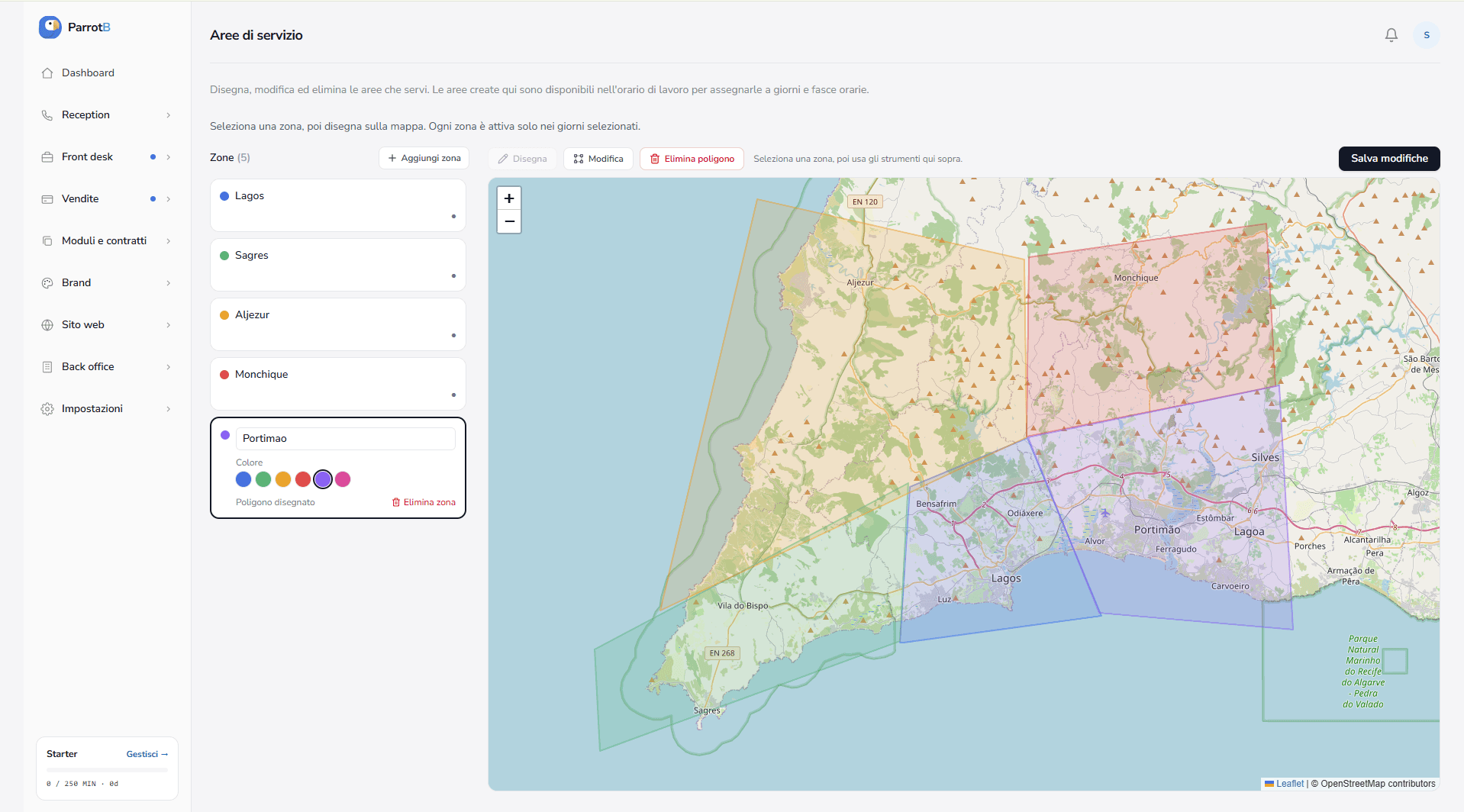
Five zones across the western Algarve. Which places are covered, and on which day, is a decision the practice makes and changes. That one constraint shapes everything about how it takes work: an enquiry from the wrong side of the map is not a booking, it is a conversation first.
It is also ParrotB’s first customer, and it joined while the platform was still an alpha.
| Build | Brand, Site and Software |
|---|---|
| Sector | Veterinary, mobile practice |
| Languages | Portuguese and English, both live |
| Live at | stefyvet.com, and stefyvet.parrotb.com |
| Modules | Base platform, website, back office. No reception |
| Covers | Five zones: Lagos, Sagres, Aljezur, Monchique, Portimao |
No elapsed figure is published for this project. Dates are not a property of the work, they are a property of the calendar: the span from day one to go-live is agreed when a project is scheduled, and it is in the quote before anything starts.
What was wrong
Every enquiry arrived without the one fact that decides whether it can be accepted: where the animal is.
A practice that travels has a shape no ordinary booking form knows about. Some places are covered and some are not, and which day they are covered on is a decision the practice makes rather than a fact a form can assume. An enquiry that does not carry a location has to be answered with a question. An enquiry from outside the area has to be turned down politely, after somebody has already spent time on it.
Before this project there was nothing in front of any of that. No site to send anyone to and no identity to put on one. Work arrived by email and was held together by the platform underneath, which is a workable answer for a first month and not for a business.
What was built
All three builds, which is why this project describes them better than a price list does.
Brand, applied rather than delivered
A mark, a palette, type and the rules for using them. Put onto the live site rather than handed over as a folder, and onto print: a business card, front and reverse. The whole identity exists as design tokens, so it can be applied again later without the designer.
A site whose words she owns
Built on the platform and running on her own domain. It runs in Portuguese and English, both live, edited from one dashboard rather than maintained as two sites. The deliverable is not the pages: it is a locked content schema, the contract that says which fields are hers.
A form builder, and a service area
The platform could not do either before this project. A form that can be sent as a link or sit inside the site, which runs the intake questions a vet would ask, records the animal in a way that stands up to GDPR, and asks where it is. Behind it, service areas drawn on a map and attached to the days they are visited.
The correction that matters, stated plainly
The form builder is live and in use. The service area check is designed and has not shipped. The areas can be drawn and attached to days; the step that reads an address at the point of enquiry and answers yes, Tuesday, or no, not covered, is specified and not yet built. It is described here because it is the clearest example of what a Software build produces, and describing an unbuilt thing as delivered is the one mistake a page like this cannot recover from.
What the first customer changed about the product
She did not want the voice assistant, and that refusal is the most valuable thing in this project.
The reception module is the platform’s flagship: an AI that answers the phone. She was happy with everything else and had no use for that one. The obvious response is to sell harder. The useful response is to ask what the module was actually for, which is getting a job into the system without a person typing it.
So intake stopped being a single product and became two. A voice agent for businesses that want one, and a form for businesses that do not, sent as a link or embedded in a site, built by the customer rather than by us.
Both now feed the same place. That is what makes it a capability rather than a favour: the next customer who says the same thing fills in a field instead of commissioning a project.
The same is true of the service area. It began as one practice’s map and became configuration every tenant can use, which is the whole reason a Software build costs what it costs rather than what building it from nothing would cost.
What was measured
The published thresholds, and what this project recorded against them. Measured and reported, not certified.
| Measure | Threshold | Recorded |
|---|---|---|
| Widths | 390 / 820 / 1440 px | not recorded |
| Accessibility | WCAG 2.1 AA, EN 301 549 | not recorded |
| Largest contentful paint | at or under 2.5 s | not recorded |
| Cumulative layout shift | at or under 0.1 | not recorded |
| Interaction to next paint | at or under 200 ms | not recorded |
No ranking, traffic or revenue claim belongs in that table, and none will be added to it.
Live, and honest about the rest
What is not here.
A case study that only lists wins is an advert. These are the things this project has not proven, and they are listed because you are about to spend real money on the strength of it.
- No outcome numbers. No enquiry counts, no conversion figures, no revenue. The site is live and the measurement period is not long enough to say anything true, so nothing is said.
- The booking flow is not live. Enquiries arrive through the form. The end-to-end booking, with the area check in front of it, is designed and not shipped.
- One customer. This is the first custom build, not the tenth. Everything on this page is one project’s evidence and should be read as one project’s evidence.
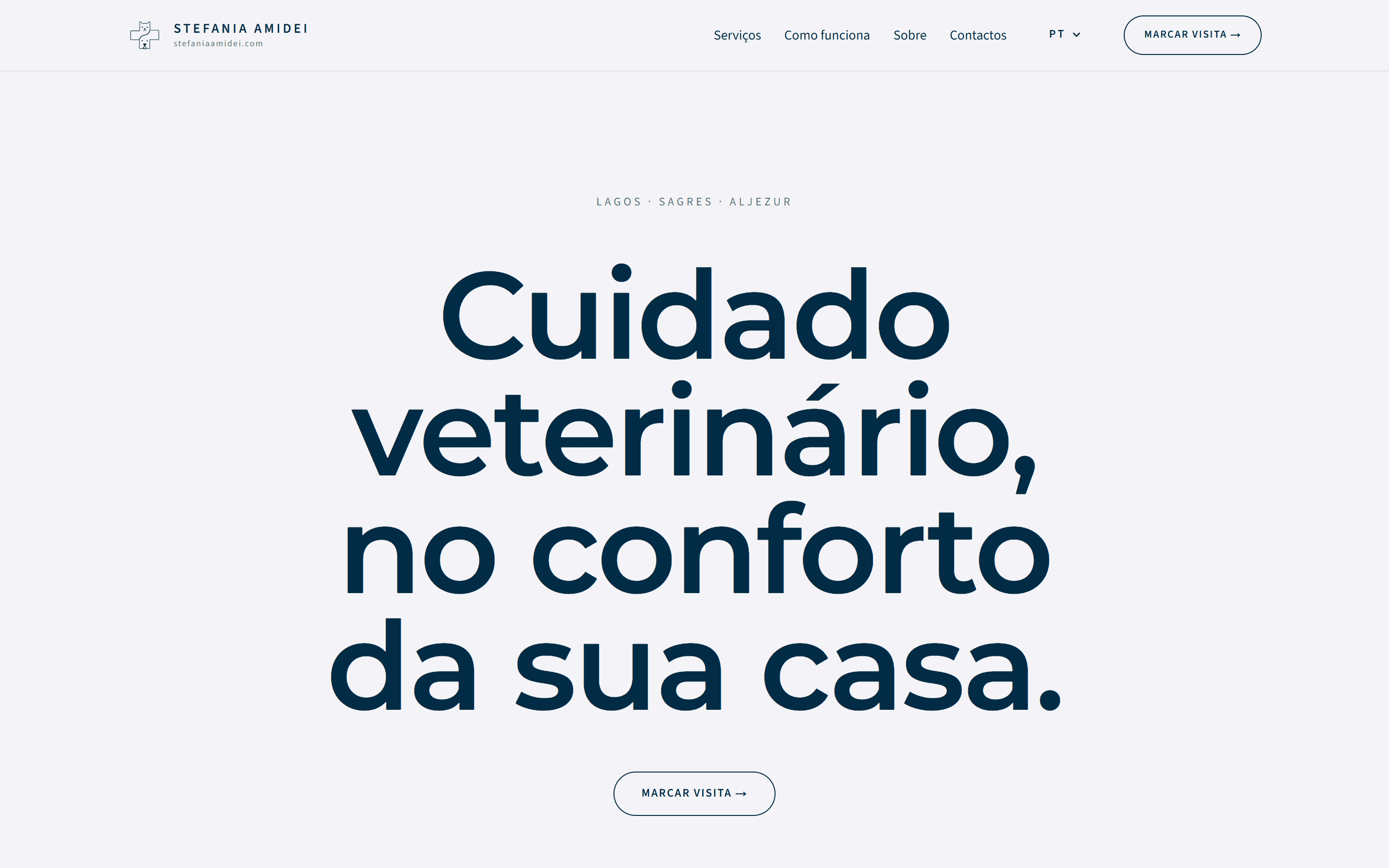
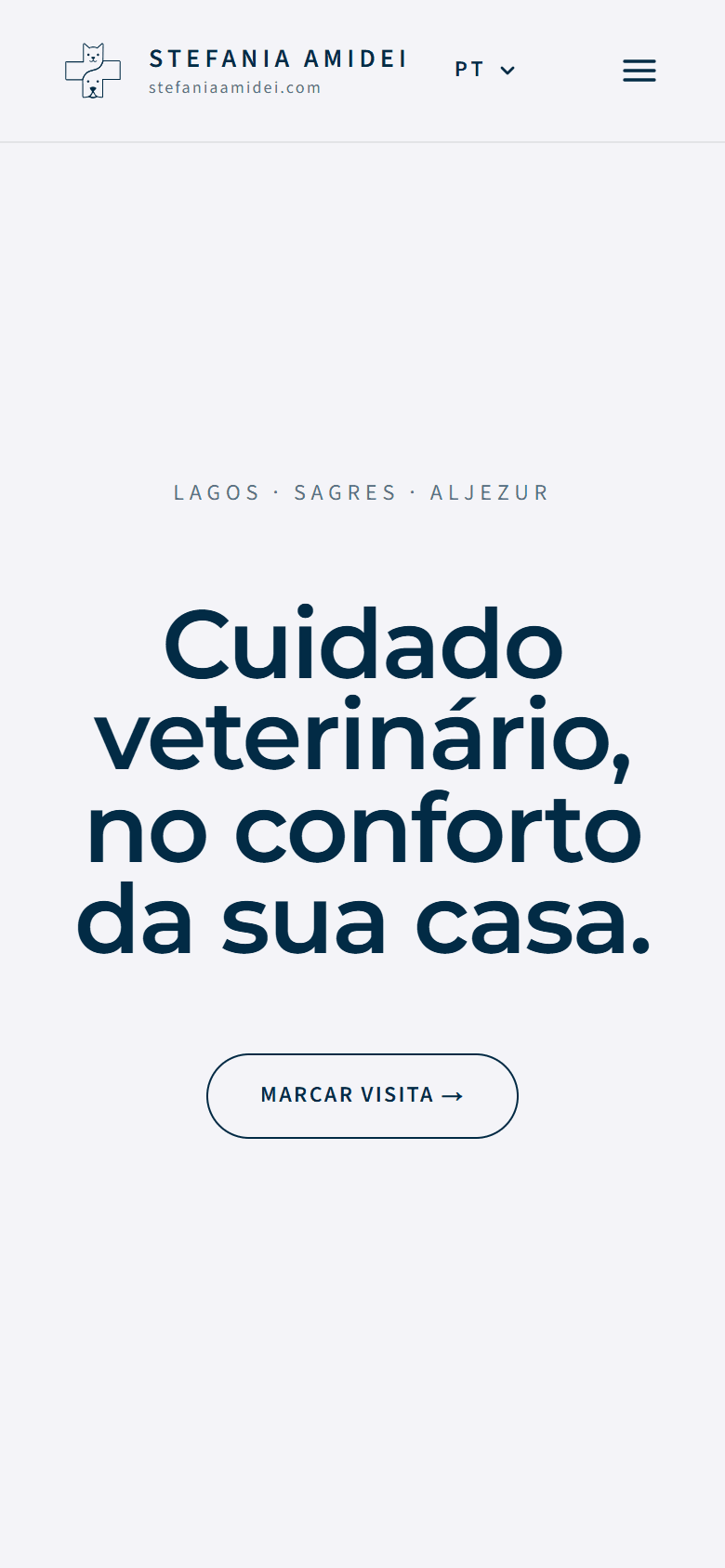
- The print and the screen disagree. The site header carries stefaniaamidei.com and the business card carries stefyvet.com. Both resolve. It is a loose end and it is listed rather than tidied out of the screenshot.
What I would do differently
Ask what a customer will not use before designing what they will. The whole project was scoped around the reception module because it is the flagship, and she turned it down in the first conversation. That refusal produced the form builder and reshaped the product for everyone who came after, which was lucky rather than deliberate. It is now the second question in every scoping call: which part of this do you already know you do not want?
Your project would run the same way.
A call, a scope, a fixed quote, a daily email, dated approvals, and a report at the end with those five rows filled in. Fifteen minutes to find out whether it should run at all.
Six questions, then pick a time.
The long version of this project, with the design decisions behind it, is at luislandi.com/stefyvet.